Best Portable Power Station for Home Backup (2026) — Compared & Ranked
When the power goes out, you need a backup that kicks in immediately — not a gas generator you have to drag outside, fuel up, and start pulling a cord. Portable power stations with UPS (uninterruptible power supply) functionality keep your fridge running, your internet on, and your medical devices powered without skipping a beat.
Our top pick for home backup is the EcoFlow Delta 3 Plus Check Price on Amazon. Its 10ms UPS switchover means your router, fridge, and CPAP won’t even blink during a power cut. With 2400W of output and expansion up to 5kWh, it handles everything from a brief brownout to a multi-day outage.
Quick Comparison
| Power Station | Price | Capacity | Output | UPS Switchover | Expandable | Best For |
|---|---|---|---|---|---|---|
| EcoFlow Delta 3 Plus | $999 | 1024Wh | 2400W | 10ms | Up to 5120Wh | Best Overall Home Backup |
| Anker Solix C1000 Gen 2 | $649 | 1056Wh | 2000W | 10ms | Up to 3168Wh | Best Value |
| Bluetti AC200L | $1,099 | 2048Wh | 2400W | 20ms | Up to 8192Wh | Best for Large Homes |
| EcoFlow Delta Pro 3 | $2,699 | 4096Wh | 4000W | 10ms | Up to 12kWh | Best Whole-Home Backup |
| Jackery Explorer 1000 V2 | $599 | 1070Wh | 1500W | 20ms | No | Best for Essential Devices Only |
1. EcoFlow Delta 3 Plus — Best Overall Home Backup
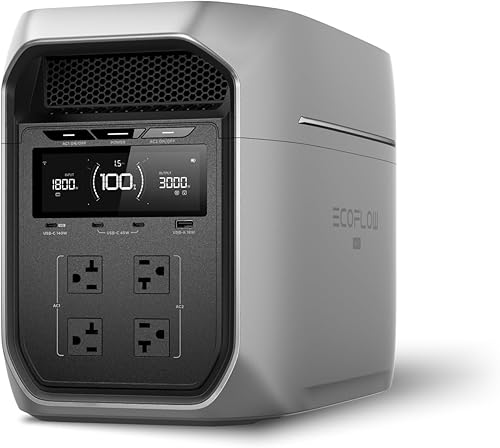
Why it’s our #1 pick: The EcoFlow Delta 3 Plus offers the best balance of UPS speed, output power, expandability, and app ecosystem for home backup. Its 10ms switchover is fast enough that your fridge compressor, router, and NAS don’t notice the power went out.
Key specs for home backup:
- 1024Wh base capacity, expandable to 5120Wh with extra batteries
- 2400W continuous output / 4800W surge — runs a full-size fridge, several lights, a router, and a laptop simultaneously
- 10ms UPS switchover — plug critical devices in and the transition is seamless
- 56-minute full charge via X-Stream — recharge between outages fast
- EcoFlow app provides real-time monitoring, remaining runtime estimates, and remote outlet control
Standout features:
- The 10ms UPS switchover is the key feature here. Plug your fridge and router into the Delta 3 Plus, keep it charged, and when the power drops, everything stays on. No interruption. Your internet doesn’t reset. Your fridge doesn’t lose its cold chain.
- 2400W handles basically every household essential simultaneously. A full-size fridge (150W running, 400W surge), a few LED lights (50W total), a router and modem (30W), a laptop (60W), and you’ve still got over 1700W of headroom. Add a space heater or window AC unit during extreme weather.
- Expandability to 5kWh means you can start with the base unit and add batteries as your budget allows. At 5kWh, you can run a fridge and basic electronics for roughly 24-30 hours.
What could be better:
- $999 is a meaningful investment. If your area only loses power once or twice a year for a few hours, this might be more backup than you need.
- At 28 lbs, it’s not easily portable between rooms. Pick a location and leave it there — a shelf in the utility room or next to your breaker panel.
Who should buy this: Homeowners and renters in areas with occasional power outages (storms, grid instability, rolling blackouts). Anyone with a home office that can’t afford downtime. CPAP users who need uninterrupted power at night.
Verdict: The smartest home backup investment for most households. Start with the base unit, expand later, and know that when the grid drops, your essentials stay on.
2. Anker Solix C1000 Gen 2 — Best Value for Home Backup
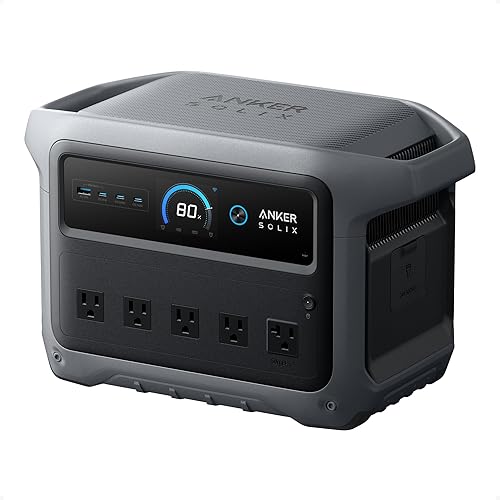
Why it’s on this list: Nearly the same UPS performance as the EcoFlow at $350 less. If your backup needs are straightforward — fridge, router, lights, devices — the Anker delivers without the premium price.
Key specs for home backup:
- 1056Wh capacity (actually slightly more than the EcoFlow base unit)
- 2000W output / 3000W surge
- 10ms UPS switchover — matches EcoFlow’s speed
- 49-minute full charge via HyperFlash
- 4000-cycle LiFePO4 battery — the longest lifespan in its class
Standout features:
- 10ms UPS switchover at this price point is exceptional. You’re getting the same critical feature as the $999 EcoFlow for $649.
- The 4000-cycle battery is the longest-lasting in the 1000Wh class. At one cycle per week (typical home backup use), that’s 76 years of theoretical lifespan. In practice, you’ll replace the unit for other reasons long before the battery degrades.
- 49-minute charge means after a power outage drains the battery, you’re back to full capacity in under an hour once power is restored. Ready for the next outage immediately.
What could be better:
- 2000W output is 400W less than the EcoFlow. For most homes this doesn’t matter, but if you want to run a space heater (1500W) AND a fridge (150W running) AND other devices simultaneously, you’re closer to the limit.
- Expansion caps at 3168Wh vs EcoFlow’s 5120Wh. For multi-day outages, that ceiling matters.
- The Anker app works fine but isn’t as polished or feature-rich as EcoFlow’s.
Who should buy this: Budget-conscious homeowners who want solid UPS backup without the premium price. Apartment renters who can’t install a whole-home generator. Anyone who values long battery lifespan over maximum output power.
Verdict: 90% of the EcoFlow’s home backup capability at 65% of the price. For most households, the Anker is the smarter financial choice. See our full EcoFlow vs Anker comparison for a detailed breakdown.
3. Bluetti AC200L — Best for Large Homes and Extended Outages
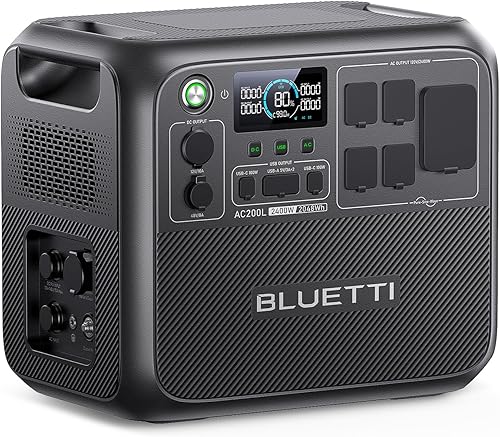
Why it’s on this list: With 2048Wh of base capacity and expansion to a massive 8192Wh, the Bluetti AC200L is built for homes that need to run more devices for longer periods. Think multi-day ice storms, not brief brownouts.
Key specs for home backup:
- 2048Wh capacity — double the EcoFlow and Anker base units
- 2400W output / 3600W surge
- Expandable to 8192Wh with B300 expansion batteries
- Dual charging: AC + solar simultaneously for faster recharging
- 20ms UPS switchover
Standout features:
- 2048Wh base capacity means a full-size fridge runs for roughly 10-12 hours on this unit alone. With expansion batteries, you’re looking at 2-3 days of fridge runtime without any recharging. That’s the difference between saving and losing hundreds of dollars in groceries.
- Expansion to 8192Wh is the highest in this comparison. For serious preparedness — hurricane country, remote locations, unreliable grids — this kind of capacity means riding out a multi-day outage without stress.
- Dual charging accepts AC and solar input simultaneously. When power comes back intermittently (common during storm recovery), you can recharge from the wall while your solar panels are also contributing.
What could be better:
- 20ms UPS switchover is slightly slower than EcoFlow and Anker’s 10ms. Most devices handle this fine, but sensitive electronics or desktop computers may briefly interrupt.
- At 62 lbs for the base unit, this is heavy. It’s not going anywhere once you place it. Add expansion batteries and you’re looking at a permanent installation.
- $1,099 for the base unit, plus $300-400 per expansion battery. A full 8kWh setup costs $2,500+.
Who should buy this: Homeowners in hurricane zones, areas with extended winter storms, or rural locations with unreliable power. Anyone who needs more than 24 hours of backup capacity without recharging.
Verdict: The tank of home backup power stations. Expensive and heavy, but nothing else in this category matches its capacity ceiling. Buy this if losing power for 2-3 days is a realistic scenario for you.
4. EcoFlow Delta Pro 3 — Best Whole-Home Backup System
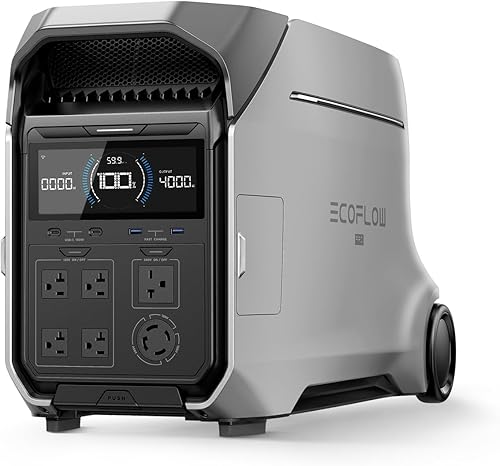
Why it’s on this list: The Delta Pro 3 isn’t really a portable power station — it’s a home battery system that happens to be portable. With 4096Wh base capacity, 4000W output, and optional integration with your home’s electrical panel, this replaces a whole-home generator for most households.
Key specs for home backup:
- 4096Wh capacity — runs a fridge for 24+ hours alone
- 4000W output / 7200W surge — runs nearly everything in your home simultaneously
- 10ms UPS switchover
- Expandable to 12kWh with extra batteries
- Optional EcoFlow Smart Home Panel integration ties it directly into your breaker box
- 120V/240V output for heavy-duty appliances (dryers, well pumps, central AC)
Standout features:
- 4000W output means you can run a fridge, a window AC unit, lights throughout the house, your internet, charge all devices, and still have headroom. This is genuine whole-home backup.
- Panel integration (sold separately) lets the Delta Pro 3 feed directly into your home’s electrical system. When power drops, your lights don’t even flicker. You don’t need to run extension cords to individual appliances.
- 12kWh expanded capacity covers most households through a 2-3 day outage with conservative usage. Pair it with solar panels and you can theoretically ride out an indefinite outage.
What could be better:
- $2,699 for the base unit is serious money. With expansion batteries and the smart home panel, a full installation can exceed $5,000. At that point, you’re in Tesla Powerwall territory.
- 114 lbs means this goes in one spot and stays there. This is not a camping accessory.
- The Smart Home Panel installation ideally requires an electrician. It’s not a plug-and-play product.
Who should buy this: Homeowners who want a gas generator replacement with zero maintenance, zero emissions, and zero noise. Anyone willing to invest in a real home energy system rather than a portable band-aid. People with solar panels looking to add battery storage.
Verdict: The premium choice. If you can afford it, the Delta Pro 3 with panel integration is the best home backup experience money can buy in the portable power station category. Most people should start with the Delta 3 Plus and upgrade later if needed.
5. Jackery Explorer 1000 V2 — Best for Essential Devices Only
Why it’s on this list: Not every home backup scenario requires running the whole house. If your goal is simply keeping phones charged, the internet on, and a CPAP running during a brief outage, the Jackery Explorer 1000 V2 does it at the lowest price with the least complexity.
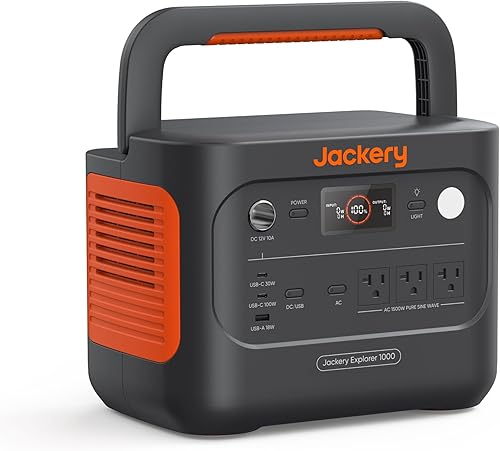
Key specs for home backup:
- 1070Wh capacity
- 1500W output
- 20ms UPS switchover
- 22 lbs — easy to move between rooms
- Dead-simple operation — one button
Standout features:
- At $599, it’s the most affordable 1000Wh option for basic backup. If you lose power 2-3 times a year for a few hours, spending $999+ on a backup system is hard to justify. This covers the essentials.
- 22 lbs means you can easily move it from the bedroom (CPAP at night) to the living room (router and devices during the day). The heavier units are essentially fixed installations.
- Jackery’s simplicity means anyone in the household can use it. Plug in the critical devices, press the power button, done. No app configuration required.
What could be better:
- 1500W output won’t run a full-size fridge in most cases (the surge draw exceeds 1500W on many models). Test your specific fridge before relying on this for food preservation.
- 20ms UPS switchover is the slowest here. Desktop computers and some network equipment may restart.
- Not expandable. If 1070Wh isn’t enough, you need a different product.
Who should buy this: Renters who don’t want to invest heavily in backup power. People in areas with short, infrequent outages. Anyone who primarily needs device charging and CPAP power during outages.
Verdict: The budget-friendly, no-fuss backup for essential devices. Won’t power your whole home, but it’ll keep you connected and your critical devices running through a typical outage.
How We Evaluated These for Home Backup
Home backup priorities are different from camping. We weighted: UPS switchover speed (how seamlessly it takes over when power drops), total expandable capacity (how long it lasts), continuous output wattage (how many appliances it handles simultaneously), and recharge speed (how quickly it’s ready for the next outage). We also considered app monitoring capabilities since you’ll want visibility into remaining capacity during an outage.
All stations on this list use LiFePO4 batteries, which handle the partial charge/discharge cycles typical of backup use better than lithium-ion and last significantly longer.
Frequently Asked Questions
Can a portable power station replace a whole-home generator?
For most homes, yes — with the right setup. A 1000Wh station covers essential devices (fridge, internet, lights, devices) for 8-12 hours. Expanded to 3-5kWh with solar panels for daytime recharging, many households can ride out multi-day outages. The exception: if you need to run central HVAC, a well pump, or an electric water heater, you need either the Delta Pro 3 class or a traditional generator. Portable power stations excel at running the essentials quietly and cleanly.
How long will a portable power station run a refrigerator?
A typical full-size fridge draws 100-200W when the compressor is running and about 30-50W averaged over a full day (the compressor cycles on and off). On a 1000Wh station, expect 20-30 hours of fridge runtime. On the 2048Wh Bluetti AC200L, roughly 40-60 hours. Keep the fridge door closed as much as possible to maximize runtime — every opening dumps cold air and forces the compressor to work harder.
What’s the difference between UPS switchover speeds?
10ms switchover (EcoFlow Delta 3 Plus, Anker C1000 Gen 2) means the gap between losing wall power and battery power kicking in is ten milliseconds — imperceptible to virtually all devices. 20ms (Jackery, Bluetti) is still fast enough for most appliances but may cause a brief interruption for sensitive electronics like desktop computers or NAS drives. For fridges, routers, and CPAP machines, either speed works fine.
Should I keep my backup power station plugged in all the time?
Most modern stations with UPS functionality are designed for exactly this. Plug it into the wall, plug your critical devices into the station, and leave it in pass-through charging mode. When power drops, it switches to battery instantly. LiFePO4 batteries handle this use pattern well, though some manufacturers recommend draining to 20% and recharging monthly to maintain battery health. Check your specific model’s manual.
How does a portable power station compare to a Tesla Powerwall for home backup?
A Powerwall (13.5kWh, ~$8,500 installed) is a permanent, high-capacity solution that integrates with your home’s electrical system and solar panels. A portable power station is a fraction of the cost, requires zero installation, and is immediately portable. The tradeoff is capacity and integration: a Powerwall runs your entire home seamlessly, while a power station runs essential circuits or individual devices. For most renters and homeowners with brief outages, a $650-1000 power station is the pragmatic choice. For homeowners in areas with frequent extended outages who own solar panels, the Powerwall justifies the investment.